
升中面試 · 中學面試題目 · 英文部分
升中面試題目 2027:
64 條英文題目,逐題練習
升中(中一)面試英文部分的常見題型都在這裡。每題附答題提示、答題框架和常見錯誤;按「練習這題」,AI 面試官 Mr Chan 就只問這一題,答完即時回饋。
升中面試英文部分會問甚麼?
- 自我介紹
- 個人問題:興趣、喜愛的科目、優點與缺點、為何選擇本校
- 經歷題:一件令你自豪、失敗或與人合作的事
- 朗讀一段短文,再回答與文章有關的問題
- 看圖說話:描述圖中的人在做甚麼
- 處境題:遇到某個情況你會怎樣做
- 時事題或意見題:說出意見和理由
每間中學的面試形式和題目都不同,請以學校公布的資料為準。
最後更新:2026年10月26日
Q1
Good morning. Please have a seat. Can you introduce yourself in English, please?
答題提示
先講名字、年齡和學校,再加兩樣你的興趣或特別經歷,大約30秒就夠。
答題框架: short connected sentences in present tense
常見錯誤:
- only saying the name
- reciting a long memorised script
Q2
Good morning. Can you tell me about yourself and your family?
答題提示
介紹家人時,除了說家中有多少人,再加一件你們一起做的事,內容會更生動。
答題框架: present simple, linking ideas with and / also
常見錯誤:
- only listing family members with no detail
- My family have four people (instead of There are four people in my family)
Q3
Hello. Can you describe yourself in three words?
答題提示
選三個不同的形容詞,每個配一個簡短例子,避免只說 good 或 nice。
答題框架: I would describe myself as ..., ... and ... I am ... because ...
常見錯誤:
- giving three words with no examples
- using very simple words like good, nice, happy
Q4
Please introduce yourself. What should we know about you?
答題提示
除了基本資料,選一件能讓老師記得你的特別事情,簡單說明就可以。
答題框架: short connected sentences: My name is ... Something special about me is ...
常見錯誤:
- I am study in P6 (am + verb)
- reciting a long memorised script
Q5
Please tell me your name and one thing that makes you special.
答題提示
先講名字和班級,再集中說一件特別的事,並解釋它怎樣發生。
答題框架: My name is ... One thing that makes me special is that ...
常見錯誤:
- giving a special thing with no explanation
- only saying the name and class
Q6
Good morning. How did you come here today? And can you introduce yourself?
答題提示
先回答老師的問題(怎樣來),再自然地轉到自我介紹,不用急。
答題框架: I came here by ... My name is ... I study at ...
常見錯誤:
- I come here by MTR (present instead of past)
- by foot (instead of on foot)
Q7
Imagine it is your first day at secondary school. How would you introduce yourself to your new classmates?
答題提示
想像你真的在跟新同學說話,語氣要友善,最後可以邀請大家和你做朋友。
答題框架: friendly tone: Hello everyone! My name is ... I hope ...
常見錯誤:
- sounding like a formal script
- no friendly ending
Q8
Can you tell me about yourself in about half a minute?
答題提示
控制在半分鐘左右:名字、年齡、住在哪裏,再加兩樣興趣,說完就停。
答題框架: short connected sentences, about thirty seconds
常見錯誤:
- speaking for too long
- I am twelve years (missing old)
個人問題:興趣、科目、優點與缺點
面試官想認識你這個人。每個答案都要有原因和一個具體例子。
Q9
Why do you want to study in our school?
答題提示
說出兩個具體原因,例如學校的活動、語言環境或你認識的師兄師姐,不要只說「因為學校很好」。
答題框架: I want to ... because ...
常見錯誤:
- Because it is good (no detail)
- talking only about the building
Q10
What are your strengths and weaknesses?
答題提示
優點配一個例子;缺點要說你怎樣改善,這樣聽起來更正面。
答題框架: My strength is that ... My weakness is that ..., but ...
常見錯誤:
- no example
- saying there is no weakness
Q11
What do you like to do in your free time?
答題提示
選一個你真正喜歡的興趣,說出甚麼時候做、為甚麼喜歡,再舉一個具體例子。
答題框架: I like ... because ... For example, ...
常見錯誤:
- only naming the hobby
- I very like drawing (word order)
Q12
Which subject do you like the most, and which one do you find difficult?
答題提示
最喜歡和覺得困難的科目都要說原因;講困難時,記得補充你怎樣改善。
答題框架: My favourite subject is ... because ... The most difficult subject for me is ...
常見錯誤:
- Because it is fun (no detail)
- I am not good in Maths (instead of good at)
Q13
Can you recommend a book you like to us?
答題提示
說出書名、用一兩句講內容,再說你喜歡的原因和適合誰看,不要把整個故事講完。
答題框架: I would like to recommend ... It is about ... I like it because ...
常見錯誤:
- retelling the whole story
- not remembering the title
Q14
Who is your role model, and why?
答題提示
揀一個你真正了解的人,用一件具體的事說明他的優點,以及他怎樣影響你。
答題框架: My role model is ... He / She ... He / She teaches me that ...
常見錯誤:
- choosing a famous person but knowing nothing about them
- He is very good (no detail)
Q15
Tell me about your primary school. What will you miss the most?
答題提示
先用一兩句描述學校,再說你最捨不得的人或事,加上原因。
答題框架: My primary school is ... I will miss ... the most because ...
常見錯誤:
- only saying my school is good
- I will miss my teacher very much (no reason)
Q16
What would you like to be in the future, and why?
答題提示
說出志願和原因,再加一句你現在為志願做甚麼準備。
答題框架: I would like to be ... because ... To reach my goal, I will ...
常見錯誤:
- I want to be doctor (missing a)
- no plan for how to reach the goal
Q17
What do you know about our school, and which activity would you like to join here?
答題提示
事前要了解學校的特色,說出一件具體的事,再講你想參加的活動和原因。
答題框架: I know that your school ... If I study here, I would like to ... because ...
常見錯誤:
- Your school is very famous (no detail)
- naming an activity the school does not have
Q18
How do you balance your studies and your free time?
答題提示
說出你的具體方法,例如時間表或先後次序,並說說效果。
答題框架: I ... First, I ... and then I ... This helps me ...
常見錯誤:
- I study hard and play (too general)
- no example of their routine
經歷題:說一件你的事
用「發生了甚麼、你怎樣做、學到甚麼」三步說一個短故事。
Q19
Tell me about a time when you felt proud of yourself.
答題提示
用「發生了甚麼、你怎樣做、學到甚麼」三步說故事,不要只說自己得了甚麼獎。
答題框架: short past story: I felt proud when ... At first ... In the end ...
常見錯誤:
- only naming a prize with no story
- using present tense for a past event, e.g. Last year I win a prize
Q20
Can you share a time when you failed at something? What did you learn?
答題提示
揀一次真實的經歷,說出當時的感受、之後怎樣做,最後講你學到的道理。
答題框架: past story: In P5, I ... I felt ... After that, I ... I learned that ...
常見錯誤:
- choosing an example that is too small or not real
- no lesson at the end
Q21
Tell me about a time you worked in a team. What was your role?
答題提示
說清楚你在小組裏負責甚麼,以及遇到分歧時你們怎樣解決。
答題框架: Last year, we ... My role was to ... Sometimes ..., so we ... In the end ...
常見錯誤:
- talking only about we without their own role
- saying there were no problems at all
Q22
Tell me about a time when you helped someone.
答題提示
說出你幫了誰、怎樣幫,以及結果;不需要很大的事,真實就好。
答題框架: Last term, ... I ... In the end ...
常見錯誤:
- a very general answer like I always help people
- no result or feeling
Q23
Do you have any duties at home or at school? Tell me about them.
答題提示
說出一兩項你負責的工作,講清楚你怎樣做,以及從中學到甚麼。
答題框架: At home, I ... At school, I am ..., so I ... These duties teach me ...
常見錯誤:
- I help my mum (no detail)
- I am responsible for clean the table (missing -ing)
Q24
Have you ever been a leader? What did you learn from it?
答題提示
說一次你帶領別人的經驗,可以是班長、隊長或小組長,重點是你學到甚麼。
答題框架: Yes, I was ... I had to ... At first ..., but I learned that ...
常見錯誤:
- saying no and stopping there
- only listing duties with no lesson
朗讀文章例子及文章問題
先默讀,留意生字和句子停頓,再清楚地讀出來。讀完後,面試官會問一條和文章有關的問題。
Q25 · 朗讀文章 · Interview Set 1
Last summer, our class visited a farm in Yuen Long. We picked fresh vegetables and learned how farmers grow food without chemicals. It was hot, but everyone worked together. At the end of the day, we cooked a simple lunch with the vegetables we had picked.
練習朗讀 →
Q26
Thank you. What did the students do at the farm, and what do you think they learned?
答題提示
先用文章的內容回答,再加一句你自己的想法。
答題框架: They ... I think they learned that ...
常見錯誤:
- copying a whole sentence from the passage
- no opinion
Q27 · 朗讀文章 · Interview Set 2
Every March, our school holds a Reading Week. Students bring old books from home and swap them with friends in the library. Last year I gave away three comic books and got a story about a girl who lived on Lamma Island. After reading it, I really want to visit the island myself one day.
練習朗讀 →
Q28
Thank you. What do students do during Reading Week, and do you think a book swap is a good idea?
答題提示
先用文章內容回答「做甚麼」,再用 I think ... because ... 說你的看法。
答題框架: During Reading Week, students ... I think ... because ...
常見錯誤:
- copying a whole sentence from the passage
- only answering yes or no
Q29 · 朗讀文章 · Interview Set 3
When Typhoon Signal Number Eight was raised last September, all schools were closed. The wind was very strong and the rain hit our windows all morning. My family stayed at home and played board games. In the afternoon, I helped my mother check that we had enough food, water and batteries for the night.
練習朗讀 →
Q30
Thank you. Why were the schools closed, and do you think schools should close on typhoon days?
答題提示
第一部分用文章的資料回答,第二部分說出你同意與否和原因。
答題框架: The schools were closed because ... I think ... because ...
常見錯誤:
- answering only the second part
- no reason for the opinion
Q31 · 朗讀文章 · Interview Set 4
On a sunny Saturday, our Scout group joined a beach clean-up in Sai Kung. We wore gloves and picked up plastic bottles, straws and old fishing nets. In just two hours, we filled twenty bags. A worker told us that rubbish in the sea can hurt turtles and fish. Now I always bring my own bottle.
練習朗讀 →
Q32
Thank you. What did the Scouts pick up at the beach, and how can we keep the sea clean?
答題提示
先列出文章提到的垃圾,再提出一至兩個你做得到的方法。
答題框架: They picked up ... I think we can ... by ...
常見錯誤:
- copying the whole passage
- giving an idea with no explanation
Q33 · 朗讀文章 · Interview Set 5
Our school Sports Day took place at Wan Chai Sports Ground. Before the relay race, my heart was beating fast. When the baton came to me, I ran as fast as I could. We did not win, but our classmates cheered loudly for us. After the race, we shared drinks and laughed together on the grass.
練習朗讀 →
Q34
Thank you. What happened in the relay, and do you think winning is the most important thing in sports?
答題提示
先簡單說出比賽結果,再說你對「贏」的看法和原因。
答題框架: In the relay, ... I think / I do not think ... because ...
常見錯誤:
- retelling every sentence
- no opinion
Q35 · 朗讀文章 · Interview Set 6
Last Christmas, our class visited an elderly home in Kwun Tong. We sang songs, played simple games and gave cards we had made to the grandmas and grandpas. One old lady held my hand and told me stories about Hong Kong in the past. When we left, she smiled and asked us to visit again soon.
練習朗讀 →
Q36
Thank you. What did the students do at the elderly home, and why do you think visits like this are important?
答題提示
先說文章中學生做了甚麼,再給一至兩個探訪的意義。
答題框架: They ... I think these visits are important because ...
常見錯誤:
- copying the passage word for word
- no reason
Q37 · 朗讀文章 · Interview Set 7
On the night of the Mid-Autumn Festival, my family went to Victoria Park to see the lanterns. There were rabbits, fish and even a giant moon made of light. We ate mooncakes on the grass and tried to guess the lantern riddles. My little brother fell asleep in my father's arms before we went home.
練習朗讀 →
Q38
Thank you. What did the family do at Victoria Park, and do you think festivals like this are still important today?
答題提示
先列出文章中的活動,再說你認為節日重要的原因。
答題框架: They ... I think festivals are ... because ...
常見錯誤:
- answering only the first part
- a reason that is too general, like because it is fun
Q39 · 朗讀文章 · Interview Set 8
At our school Science Fair, my partner and I built a small robot that could sort rubbish into paper, plastic and metal. On the first try, it dropped everything on the floor. We changed the program three times. In the end, it worked, and many visitors stopped to watch it. I felt proud of our hard work.
練習朗讀 →
Q40
Thank you. What could the robot do, and why do you think the students did not give up?
答題提示
第一部分直接用文章的資料回答,第二部分說出你的推測和原因。
答題框架: The robot could ... I think they did not give up because ...
常見錯誤:
- The robot can sorting rubbish (verb form)
- no reason for the second part
看圖說話題目
先說地點,再說人物在做甚麼(用現在進行式),最後補充細節或感受。
Q41
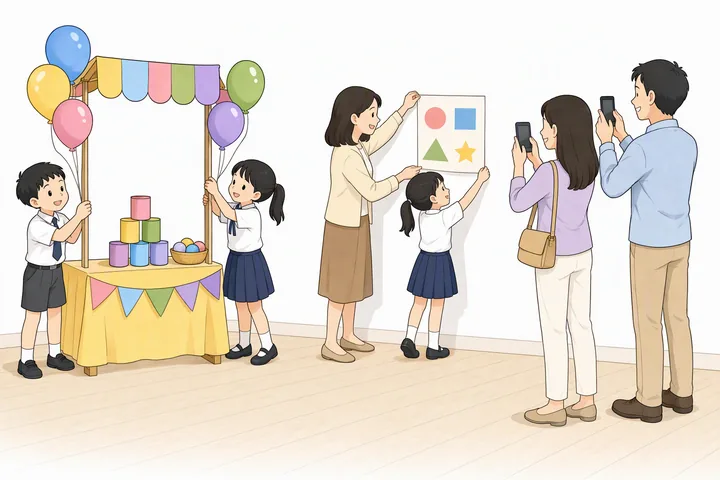
Please look at the picture. What are the people doing?
答題提示
由整體說起(這是甚麼場合),再逐一說出不同的人在做甚麼,用 is / are + -ing。
答題框架: present continuous: is/are + -ing
Q42
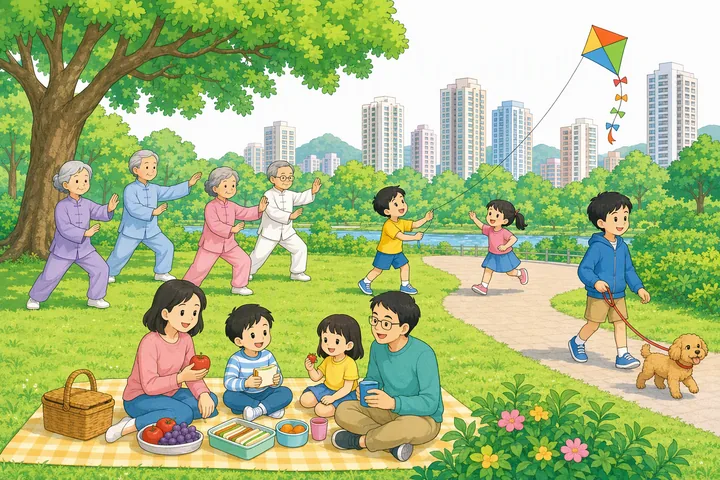
Here is a picture of a park. Can you describe what you see?
答題提示
先說這是甚麼地方、甚麼時間,再由左至右逐一描述每組人在做甚麼。
答題框架: present continuous: is/are + -ing, with place words like under, on, next to
Q43
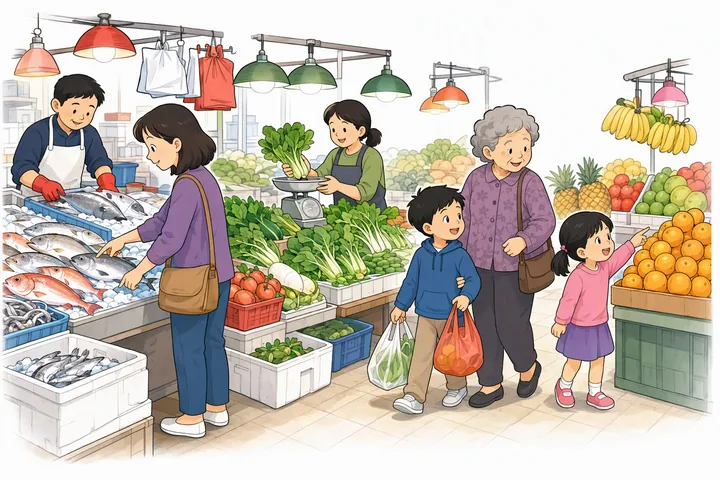
Look at this picture. Tell me what is happening.
答題提示
先說場景,再描述每個人的動作;可以加一句你的推測,例如他們可能在買晚餐的材料。
答題框架: present continuous: is/are + -ing
Q44
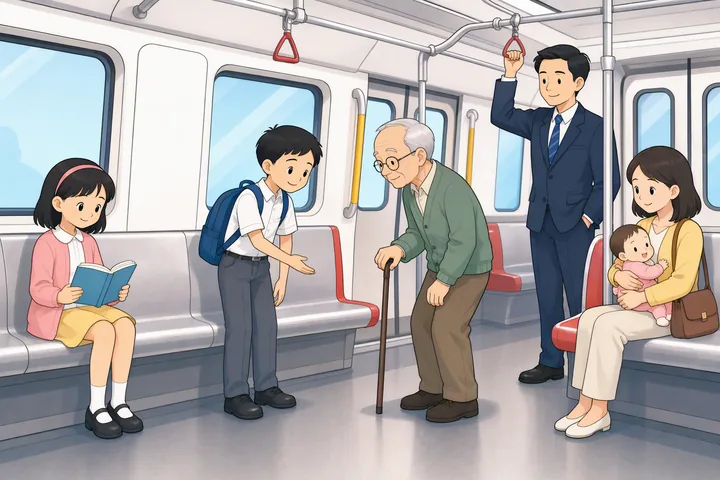
Please describe this picture to me.
答題提示
先說地點,再逐一描述;可以加一句你對男孩讓座的看法。
答題框架: present continuous with place words: This picture shows ... A boy is ...
Q45
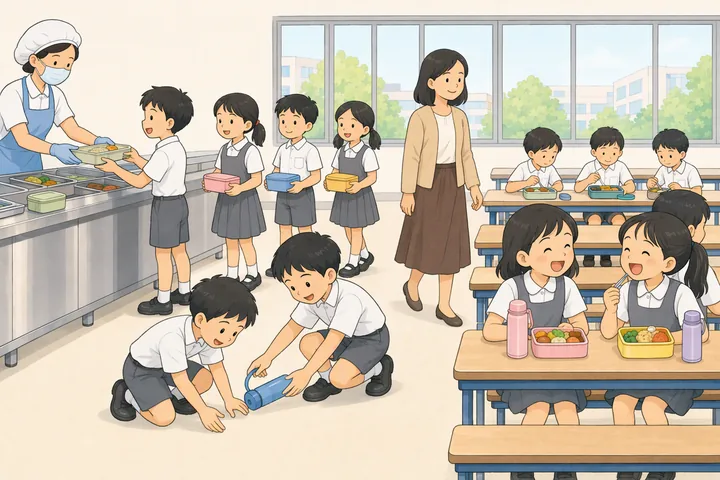
Look at the picture. What can you see?
答題提示
不要只說食物,要描述人物的動作;可以說說誰在幫助別人。
答題框架: present continuous: is/are + -ing
Q46
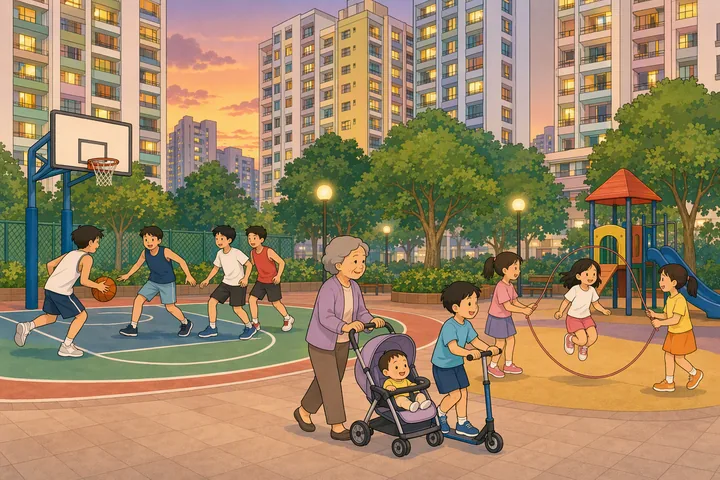
Please look at this picture and tell me what the people are doing.
答題提示
描述每組人的動作,可以用 while 或 and 把兩個動作連在一起。
答題框架: present continuous: is/are + -ing, linked with and / while
Q47
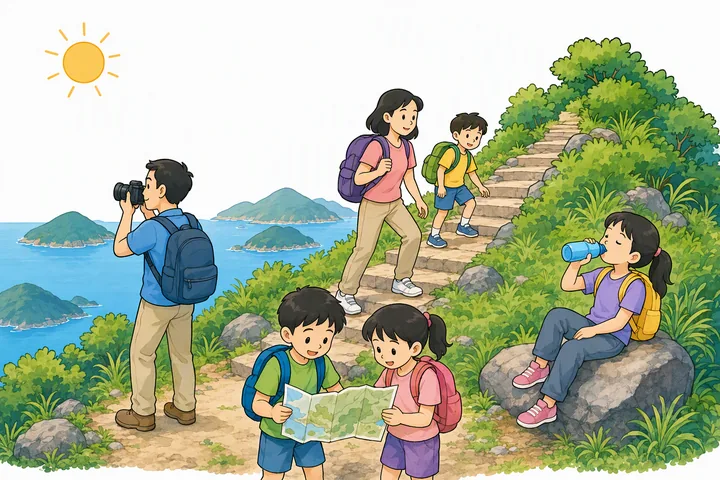
Here is a picture of some people on a hiking trail. Can you describe it?
答題提示
先說背景(山、海),再描述人物;描述完可以補充他們可能的感受。
答題框架: present continuous with There is / There are for the background
Q48

Please look at this picture. What are the people doing?
答題提示
先說出是甚麼節日前的場景,再逐一描述人物的動作。
答題框架: present continuous: is/are + -ing
處境題
說出你會怎樣做、為甚麼,並照顧到其他人的感受。
Q49
If you saw your good friend cheating in a test, what would you do?
答題提示
處境題沒有標準答案,重點是說出你的做法和原因,表現你會顧及別人。
答題框架: I would ... because ...
常見錯誤:
- I will tell teacher (no reason)
- only saying 'I don't know'
Q50
Imagine you find a wallet on the floor of an MTR station. What would you do?
答題提示
說出你的做法和原因,並顯示你會替失主着想。
答題框架: I would ... so that ... because ...
常見錯誤:
- only saying one word like police
- keeping the money because nobody saw
Q51
Imagine you are doing a group project, but one member never does his part. What would you do?
答題提示
先說你會怎樣和組員溝通,再說如果不成功下一步怎樣做,顯示你處事有步驟。
答題框架: First, I would ... If ..., I would ... because ...
常見錯誤:
- blaming the classmate without talking first
- I will scold him (no kind solution)
Q52
If you could be the principal of your school for one day, what would you change?
答題提示
提出一至兩個實際的改變,並說明對同學有甚麼好處。
答題框架: If I were ..., I would ... so that ... I think ...
常見錯誤:
- unrealistic ideas like no school forever, with no reason
- If I am principal, I will ... (mixing conditionals)
Q53
Imagine you and your best friend both want to be class representative. What would you do?
答題提示
表現你重視公平和友誼,說出你會怎樣做和為甚麼。
答題框架: I would ... but first I would ... If ..., I would ...
常見錯誤:
- giving up without a reason
- I will make her lose (unkind answer)
Q54
Suppose you borrowed a classmate's calculator and broke it by accident. What would you do?
答題提示
誠實是重點:說出你會怎樣道歉和補救,並說明原因。
答題框架: I would ... Then I would ... I think ... because ...
常見錯誤:
- hiding the problem
- only saying sorry with no solution
Q55
Your best friend's birthday party and an important school competition are on the same day. What would you do?
答題提示
沒有標準答案,重點是說出你的選擇、原因,以及怎樣照顧另一方的感受。
答題框架: I would ... because ... But I would ...
常見錯誤:
- I don't know (no decision)
- choosing without any reason
Q56
If you saw some students laughing at a younger student in the playground, what would you do?
答題提示
說出你會即時怎樣做、怎樣照顧被欺負的同學,以及會不會找老師幫忙。
答題框架: I would ... Then I would ... I think ...
常見錯誤:
- doing nothing because it is not my business
- fighting with the students
時事題及意見題
先清楚表態,再給兩個理由和一個例子,最後總結。
Q57
Have you heard any news recently, in Hong Kong or around the world? Tell me about it and what you think.
答題提示
揀一則你真的明白的新聞,先簡單說發生了甚麼,再說你的看法。
答題框架: Recently I read/heard that ... I think ... because ...
常見錯誤:
- no opinion
- a topic they cannot explain
Q58
Some people think students should not have homework during school holidays. What do you think?
答題提示
先表明立場,再給兩個理由;可以同時說出兩面的看法,最後作一句總結。
答題框架: I agree / disagree ... because ... On the other hand ... So I think ...
常見錯誤:
- only saying I agree
- Holiday no need homework (missing verb)
Q59
Some people say children under twelve should not use social media. Do you agree?
答題提示
清楚說出你同意多少,給出理由,並提出一個折衷的方法。
答題框架: I agree / disagree because ... But ... For example, ...
常見錯誤:
- talking only about games, not social media
- giving no reason
Q60
Do you think online lessons are as good as lessons in the classroom?
答題提示
比較兩者的好處和壞處,最後清楚說出你的選擇。
答題框架: I think ... is better because ... However, ...
常見錯誤:
- only saying online is boring
- no comparison between the two
Q61
Many children spend hours on screens every day. How much screen time do you think is healthy?
答題提示
給一個具體的時間,說出理由,再分享你家中的做法或建議。
答題框架: I think ... is enough because ... We should also ...
常見錯誤:
- only saying screens are bad
- no example or suggestion
Q62
Some people think PE lessons are not as important as English and Maths. Do you agree?
答題提示
先清楚表明同意或不同意,再用兩個理由支持你的看法。
答題框架: I agree / disagree. Firstly, ... Also, ... So ...
常見錯誤:
- only saying PE is fun
- I am disagree (extra am)
Q63
Should students be allowed to bring mobile phones to school?
答題提示
可以有條件地同意或反對,說出好處和壞處,並提出一個規則。
答題框架: I think ... However, ... So the school could ...
常見錯誤:
- only saying phones are bad
- no suggestion
Q64
Hong Kong has had many very hot days in recent summers. Have you heard any news about this, and what can we do?
答題提示
先簡單說你聽過的新聞,再說原因,最後提出一兩個自己做得到的方法。
答題框架: I heard on the news that ... I think ... We can help by ...
常見錯誤:
- no actions, only saying it is hot
- a reason they cannot explain
答案會怎樣被評分?
Mikoe 參考香港考評局 TSA 說話評估常用的四個範疇:內容及組織、詞彙及語法、發音及表達、溝通策略,每項 0 至 4 分。
家長可以怎樣幫孩子準備?
- 每天練 2 至 3 題,比考前一晚練 20 題更有效。
- 讓孩子親口說出答案,不要只寫下來背誦。
- 先練自我介紹和為何選擇本校,這兩題最常出現。
- 聽回孩子的錄音,一起找出可以加多一個例子的地方。
常見問題
升中面試會問甚麼題目?
英文部分常見的題型有:自我介紹、個人問題(興趣、科目、優點與缺點、為何選擇本校)、經歷題、朗讀短文及文章問題、看圖說話、處境題,以及時事或意見題。每間學校的形式不同,請以學校公布為準。
升中面試題目有參考答案嗎?
本頁每題都附答題提示、答題框架和常見錯誤。按「練習這題」答完後,如果答案還有改善空間,Mr Chan 會按孩子自己的答案給一個參考答案和改善建議。
中學面試題目每間學校都一樣嗎?
不一樣。本頁的題目是 Mikoe 按升中面試常見題型編寫的練習題,並非任何學校的真實試題。
朗讀文章怎樣準備?
先默讀一次,留意生字和句子在哪裡停頓;讀的時候速度放慢、咬字清楚。Mikoe 的朗讀練習會按發音和流暢度給分。
看圖說話怎樣答?
先說圖中是甚麼地方,再逐一說出人物在做甚麼(用現在進行式,例如 The children are flying a kite),最後補充一個細節或你的感受。
有小組討論題目嗎?
目前 Mikoe 練習的是英文個人面試。小組討論會稍後加入。
每天練多少題比較好?
每天 2 至 3 題已經足夠。重要的是每題都親口說出來,並根據回饋再試一次。
本頁題目由 Mikoe 按常見題型編寫,用作練習,並非任何學校的真實試題。Mikoe 是 Edtools 的獨立產品,與教育局、香港考試及評核局或任何學校並無關連。